Unarmored Cables
Unarmored Cables: Lightweight, Durable and Ready for Underground Demands


About
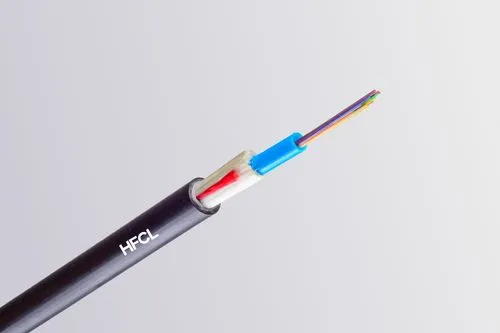
Explore the versatility of our unarmored cable, ideal for seamless use in underground ducts. Tailored for duct pulling and blowing applications, our unarmored cable designs are customizable based on your unique specifications, ensuring a perfect fit for the cable duct ratio and mechanical performance requirements. From underground duct pulling to backbone and access networks, these unarmored cables are designed to meet diverse applications.
Features
Benefits
Loose Tube Design
Adapts to your needs, from 2 fibers to an impressive 576 fibers.
Ribbon Configuration
Offers high fiber count, from 96 fibers to 2004 fibers, revolutionizing splicing
Moderate Tensile Strength
Handles tough pulls with up to 3500N capability
High Crush Resistance
Stands strong under pressure, up to 2000N/10 cm
Rodent Protection
Ensures safety from unwanted visitors, safeguarding your connections
UV Resistant
Underground durability protected from harmful UV rays
Key Specifications
Applications
- Underground direct burial
- Backbone network
- Access network
- Feeder and distribution
Variants
- Duct Loose Tube Cable
Explore loose fibers enclosed in jelly-filled tubes, spanning from 2 fibers to 432 fibers. These come in both unitube and multitube constructions, making the cable versatile for both blowing and manual pulling applications
- Duct Ribbon Cable
Opt for high fiber counts ranging from 96 fibers to 1152 fibers, available in 6/8/12 fiber ribbons. This design streamlines the splicing process by allowing all fibers in the ribbon to be spliced together at once, reducing time and effort compared to individual fiber splicing
FAQs
Armored cables feature an additional layer of protective armor, enhancing physical durability and resistance to environmental factors. Unarmored cables lack this protective layer, making them lightweight and flexible. The choice between them depends on specific installation requirements, with armored cables suitable for harsher conditions, while unarmored cables excel in controlled environments where flexibility is crucial.
Unarmored optical fiber cables are often employed in controlled environments, such as indoor installations and structured cabling systems. Their flexibility and lightweight design make them suitable for applications where physical protection is not a primary concern, contributing to simplified installations in various indoor settings.
Outdoor unarmored cable is designed for direct burial in outdoor networks. They have rodent-proof and UV protection features, incorporating high-strength FRP rods and glass yarns in an unarmored design. The loose tube, made of thermoplastic material, ensures a lightweight and compact structure. Additionally, these optical fiber cables exhibit excellent water resistance, moisture resistance, and crush resistance performance, making them ideal for various outdoor applications.