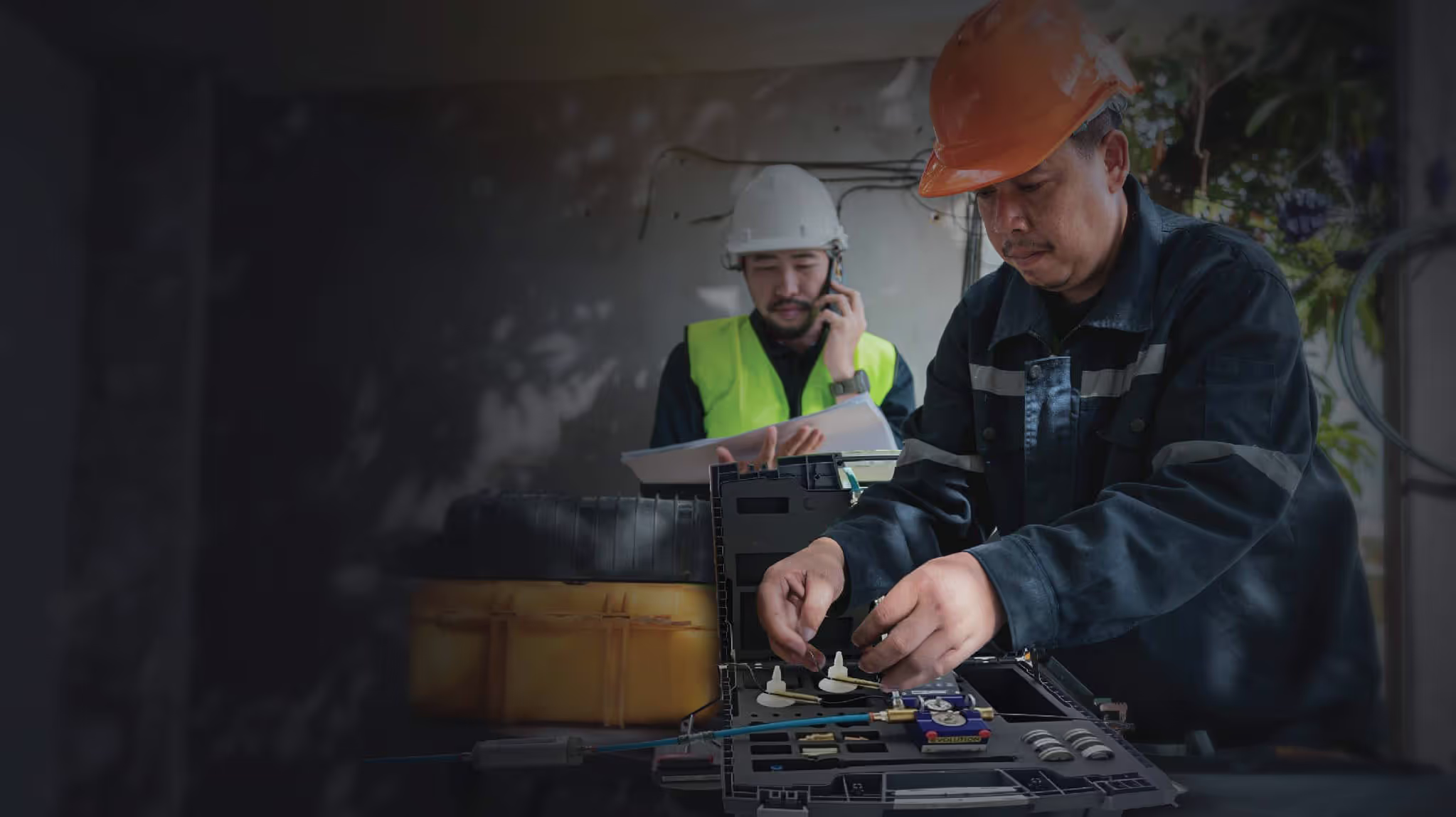
FTTH Cables

Redefine the way you work, stream, and connect with HFCL’s FTTH Cables

Choose our Fiber-to-the-Home (FTTH) Cables, available in both single-mode and multimode constructions. From data centers to pole dropping, premise distribution, riser installations, and plenum setups – these optical fiber cables are the versatile solution you have been waiting for. Our indoor FTTH cables feature low smoke zero halogen (LSZH) polymer and carry a B2ca classification for added fire safety.
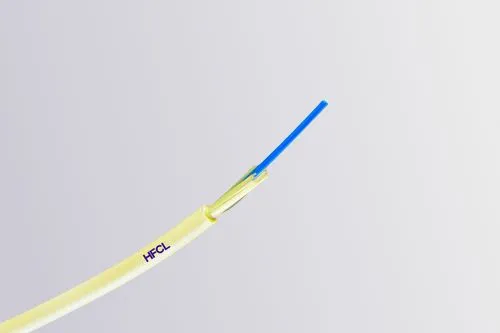
Simplex Cables

Simplify one-way data transfer with our simplex fiber cables, ideal for FDMS, data centers, and high-rise buildings. Robust design for seamless performance
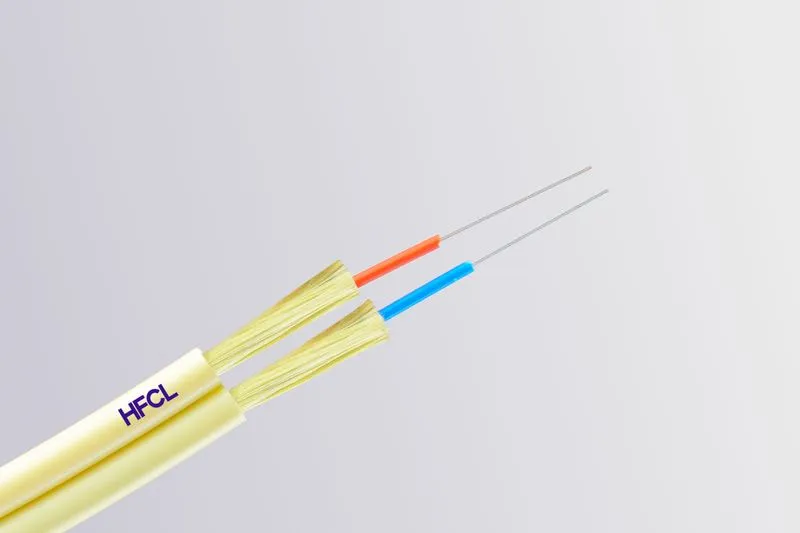
Duplex Cables

These duplex cables with a zip-cord arrangement are perfect for devices needing bi-directional data transfer, ensuring efficient simultaneous data exchange
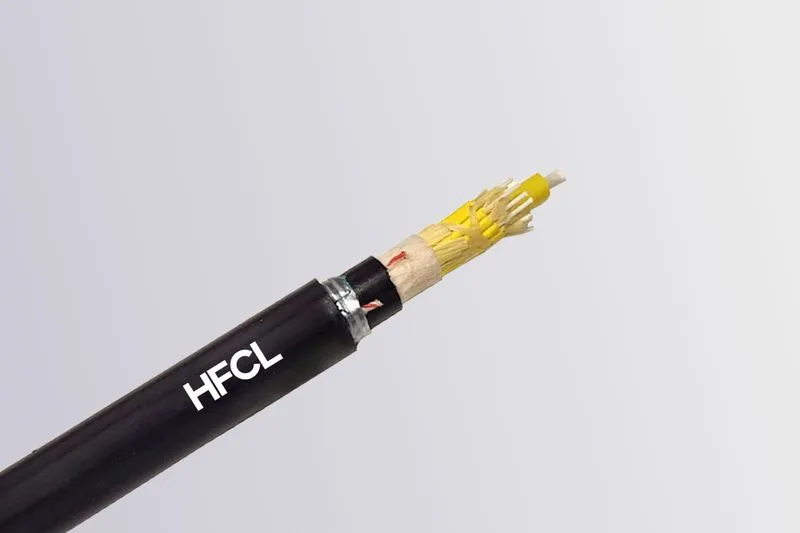
Breakout Cables

Each simplex cable within the outer jacket easily breaks out to serve as a patch cable, offering an efficient solution for fiber-to-the-desk applications
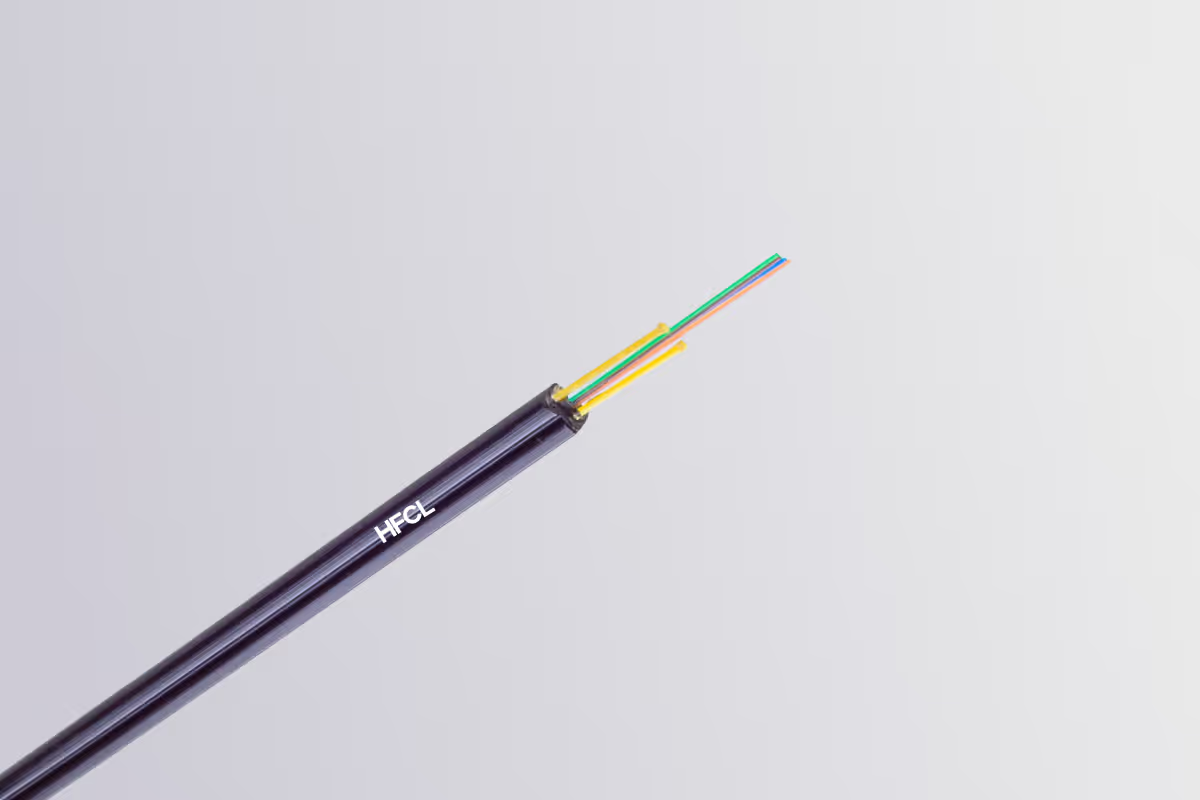
Flat Drop Indoor Cables

Explore our flat drop indoor cable range, 1 to 6 fibers, gel-free, lightweight, and easy to install. Perfect for FTTH networks in high-rise buildings
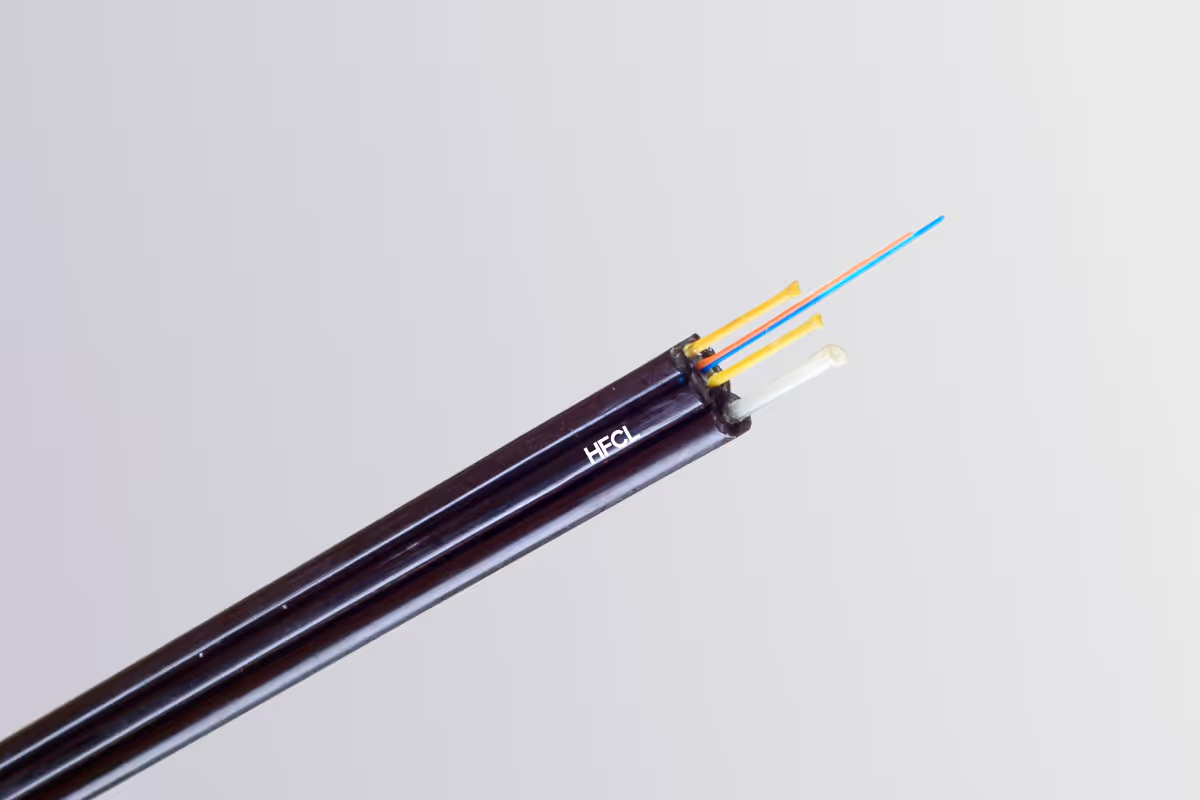
Flat Drop Indoor-Outdoor Cables

UV-resistant, flame-retardant optical fiber cables with sturdy Steel Wire. Perfect for last-mile connectivity, spanning 20-25 meters from poles to homes
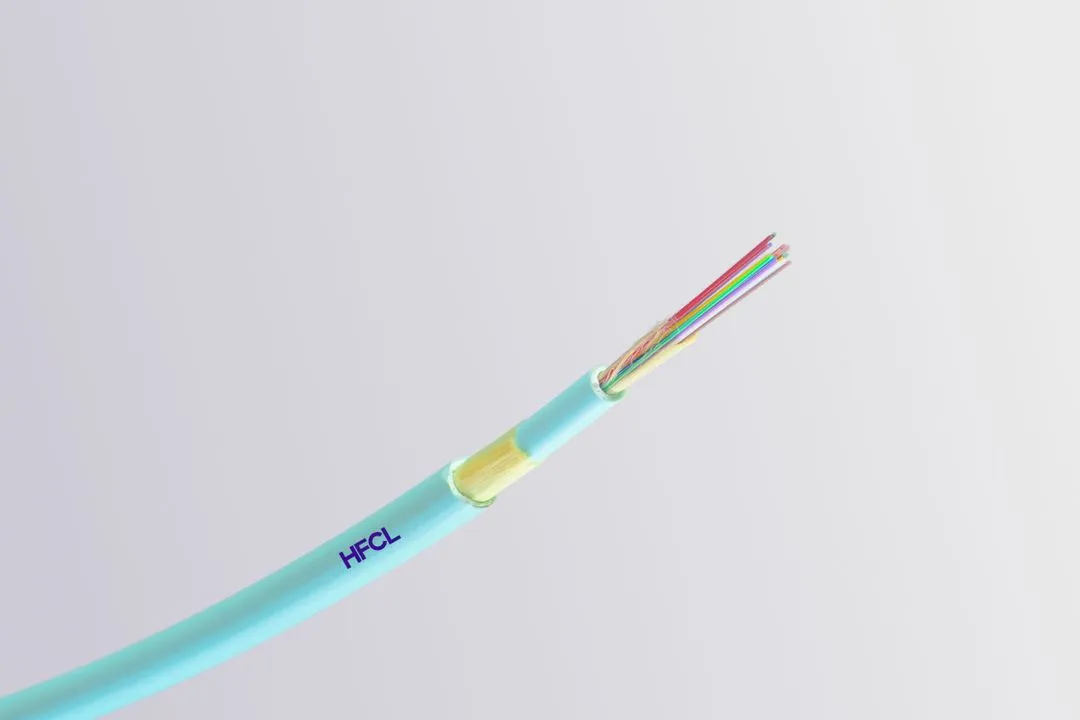
Premise Distribution Cables

Tight-buffered fibers navigate trays and plenums, connecting easily to distribution boxes, ideal for compact spaces and seamless in-building data transfer
No items found.

NABL-accredited testing & certification facilities

Case Study

UK’s Leading Telecom Operator Boosts Fire Safety with HFCL's Top-Rated B2ca Cables

A leading telecom provider in the UK faced an urgent need to future-proof their fiber plant by improving the flame rating of their legacy cabling solution. There was a critical requirement to improve their cables’ rating to the more stringent Cca classification. This upgrade was crucial to enhance fire safety and comply with evolving regulatory standards. Moreover, the customer sought a solution within an aggressive timeframe and with a minimal cost impact to minimize operational disruptions.
UK’s Leading Telecom Operator Boosts Fire Safety with HFCL's Top-Rated B2ca Cables

1000 metres in a Single Blow: HFCL's Optibend Unitube Mini Cable for FTTx Connectivity

HFCL took on a demanding FTTx requirement from a European customer to deliver a Unitube blown cable capable of reaching 1000 metres in an 8/5 mm microduct at 7 bar pressure. While the initial 24-fibre prototype showed promise, it fell short under real-world conditions. This led to a focused redesign. After 26 iterations and close collaboration with HTL Hosur, HFCL developed an optimized Optibend Unitube Mini Cable with a low-friction outer jacket, validated through rigorous testing, and proven to meet the customer’s performance expectations.
1000 metres in a Single Blow: HFCL's Optibend Unitube Mini Cable for FTTx Connectivity
1 / 3

Insights

No items found.

FAQs

What is FTTH and why is it important?

FTTH (Fiber-to-the-Home) delivers high-speed internet directly to homes using optical fiber, offering unmatched bandwidth, low latency, and reliable connectivity. Unlike traditional copper or coaxial networks, FTTH supports high-demand applications such as 4K/8K streaming, cloud computing, IoT devices, remote work, and online education. Telecom operators worldwide are deploying FTTH to bridge the digital divide, particularly in underserved areas. Advanced fiber solutions, including compact and bend-insensitive cables, ensure quick installation, long-term reliability, and future-proof networks capable of handling growing data demands efficiently.

How does FTTH improve urban broadband networks?

FTTH improves urban broadband networks by delivering gigabit-speed internet to residential and enterprise users. Compact fiber cables and bend-insensitive designs allow easier deployment in dense urban ducts and micro-trenches. High-capacity FTTH infrastructure supports bandwidth-intensive applications such as streaming, cloud services, smart homes, and telemedicine. By reducing signal loss and network downtime, FTTH ensures consistent user experience, enabling operators to meet increasing demand for reliable high-speed connectivity and expand their networks efficiently while preparing for future technologies like 5G and IoT.

Can FTTH support future-ready smart homes?

Yes, FTTH provides the high bandwidth, ultra-low latency, and stable performance required for smart homes and IoT devices. It allows seamless streaming, cloud access, online gaming, and remote working without network interruptions. Telecom operators leverage FTTH networks to deliver scalable and future-ready infrastructure that can handle rising digital traffic. By integrating advanced fiber technologies and microcables, FTTH networks ensure reliability, energy efficiency, and consistent performance, enabling households to adopt next-generation digital services while supporting telecom operators’ long-term network growth.