About
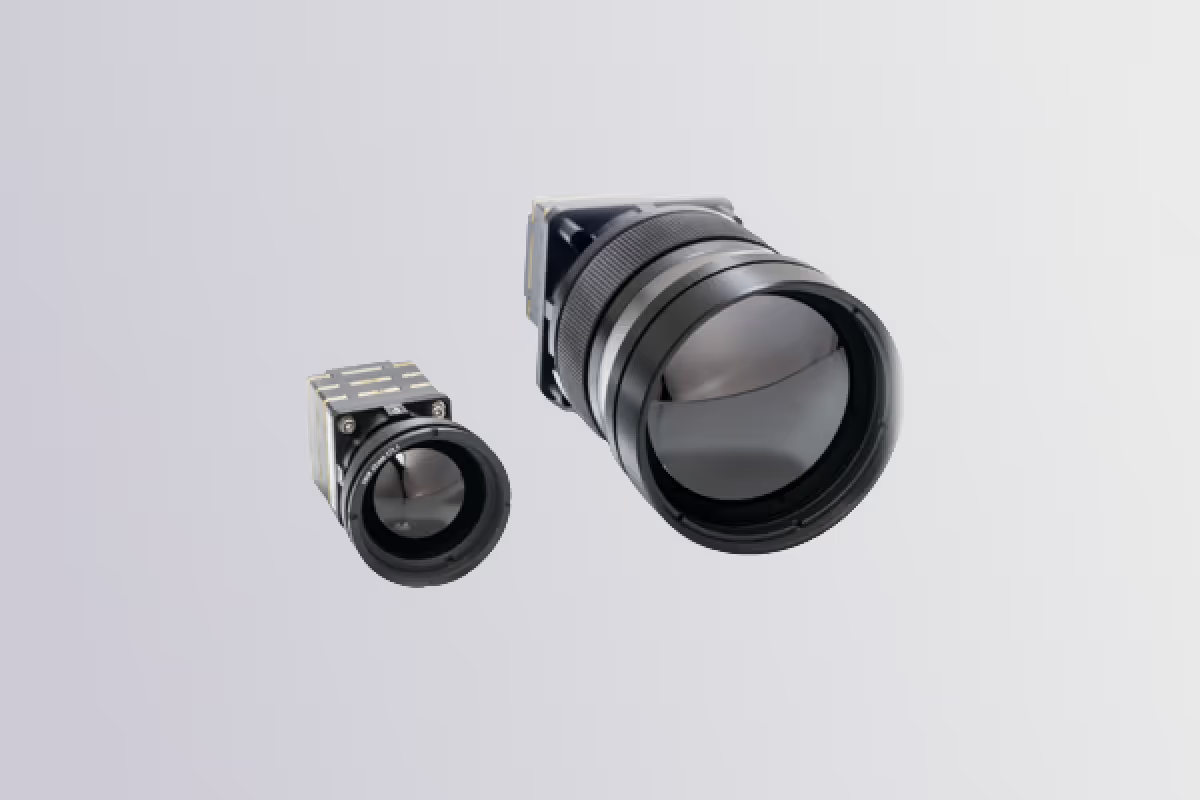
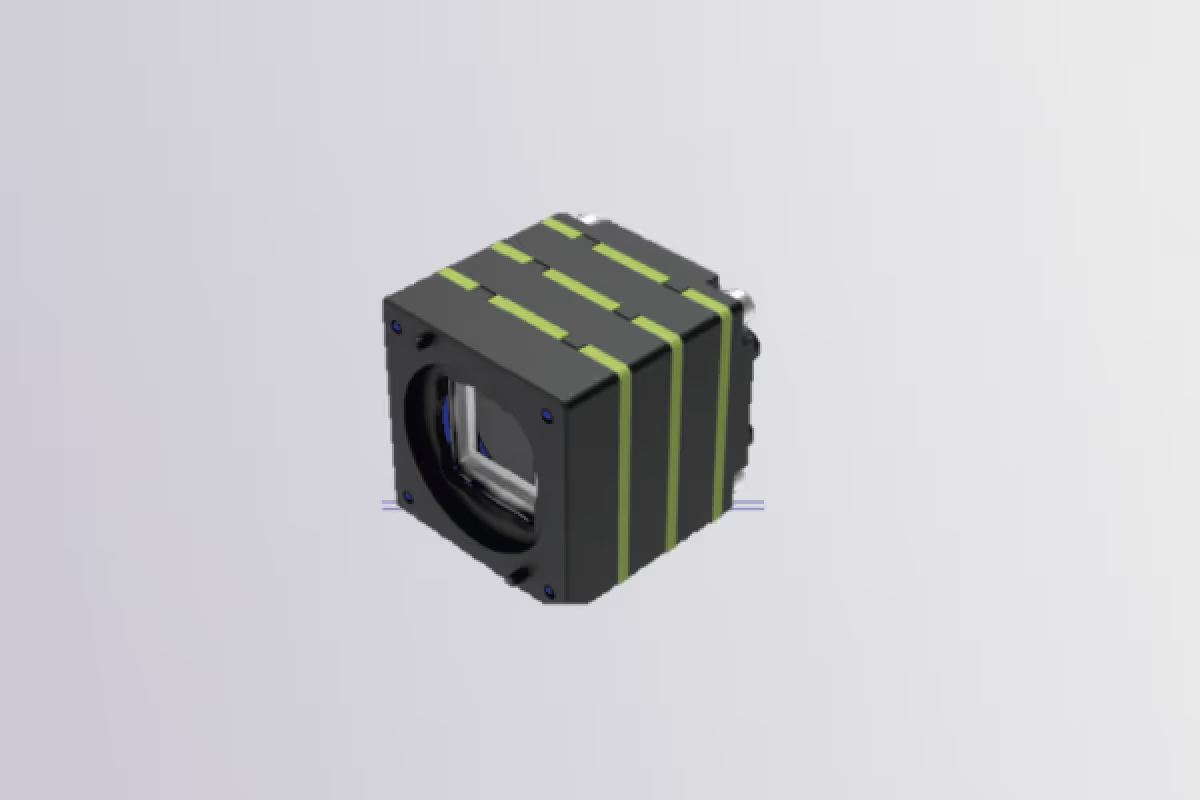
HFCL’s Thermal Imaging Core is indigenously designed and developed TI Core with one of the most optimized SWaP across the globe. The product encompasses a wide field of applications suiting all kinds of Land, Aerial and Sea based platforms / products for security, surveillance and reconnaissance. The product is compliant to MIL STD 810 & JSS 55555 / 5855.
Features
Benefits
Key Specifications
Applications
Variants
FAQs
The two main types of thermal imaging are uncooled and cooled systems. Uncooled thermal imaging uses microbolometers that don't require cooling and are cost-effective, making them suitable for civilian applications. Cooled thermal imaging systems, which use cryogenic cooling to enhance sensitivity, are more expensive and are often employed in military, scientific, or industrial settings where higher performance is critical.
Pixel pitch in thermal imaging refers to the distance between the centers of adjacent pixels in the thermal sensor array. It is measured in micrometers and impacts the image quality. Smaller pixel pitch results in higher image resolution, allowing for better detail and clarity in thermal images. A finer pixel pitch is especially crucial for applications requiring precise temperature measurements or the identification of smaller objects in the thermal scene.
Thermal imaging cores are integrated into surveillance systems, weapon sights, drones, and vehicle-mounted platforms. They enable real-time detection and tracking of heat-emitting objects, enhancing operational performance in defence, homeland security, industrial monitoring, and search and rescue missions.