Overhead Cables
Experience Optimal Signal Transmission and Maximum Durability with our Overhead Cables

About
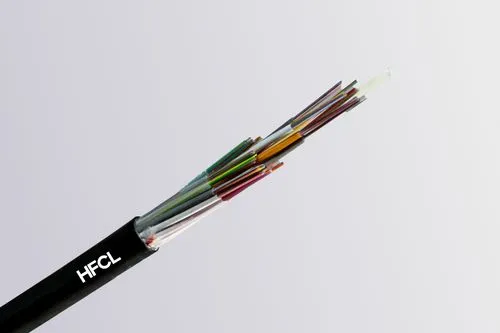
Our micromodule overhead cables redefine connectivity with freely laid optical fibers surrounded by jelly-filled micromodules. These optical fiber cables guarantee optimal signal transmission by preventing interference through water-blocked core interstices. Embedded steel rod strength members elevate the cable's durability and structural integrity. Ideal for various applications, from midspan installations to backbone networks, access networks, feeder and distribution setups, and crucial last-mile connectivity.
Features
Benefits
Advanced Micromodule Technology
These overhead cables utilize jelly-filled micromodules for enhanced cable performance
Compliance with Industry Standards
Adherence to top-tier cable performance standards, including IEC 60793, ANSI/ICEA S-87-640, Telcordia GR-20, ITU-T, RoHS
Versatile Fiber Options
Availability of fiber options following ITU-T standards, offering choices such as G.657.A2 and G.652.D
Robust Environmental Resilience
Effective functionality across a diverse range of environmental conditions, spanning from -30⁰C to +60⁰C
Key Specifications
Applications
- Midspan
- Backbone network
- Access network
- Feeder and distribution network
- Last-mile connectivity
- Network
Variants
FAQs
An overhead cable is a type of cable suspended high above the ground, typically on telegraph poles, commonly used for transmitting power and data. Unlike underground cables, overhead cables, often made of aluminum, leverage air for insulation, requiring less insulation material. This cost-effective alternative is popular in crowded residential areas, with bare aluminum cable being a common type, particularly suitable for long-distance power transmission. Selection criteria include electrical conductivity, tensile strength, and total cable density.
Overhead cables are typically supported by lattice-type steel towers or pylons, serving as carriers for high-voltage lines. In remote regions, helicopters may be employed to install aluminum towers for cable support.
Underground cables, buried with trenching, remain hidden, minimizing visual impact and weather effects. They often need extra insulation and demand more complex maintenance. Although installation costs are higher, maintenance is lower. In contrast, overhead cables, suspended on poles, are visible and more prone to weather. They leverage air for insulation, facilitating easier inspection and maintenance, with lower installation but higher ongoing costs. Underground cables suit urban and sensitive areas, while overhead cables are cost-effective in rural and crowded zones.