
About
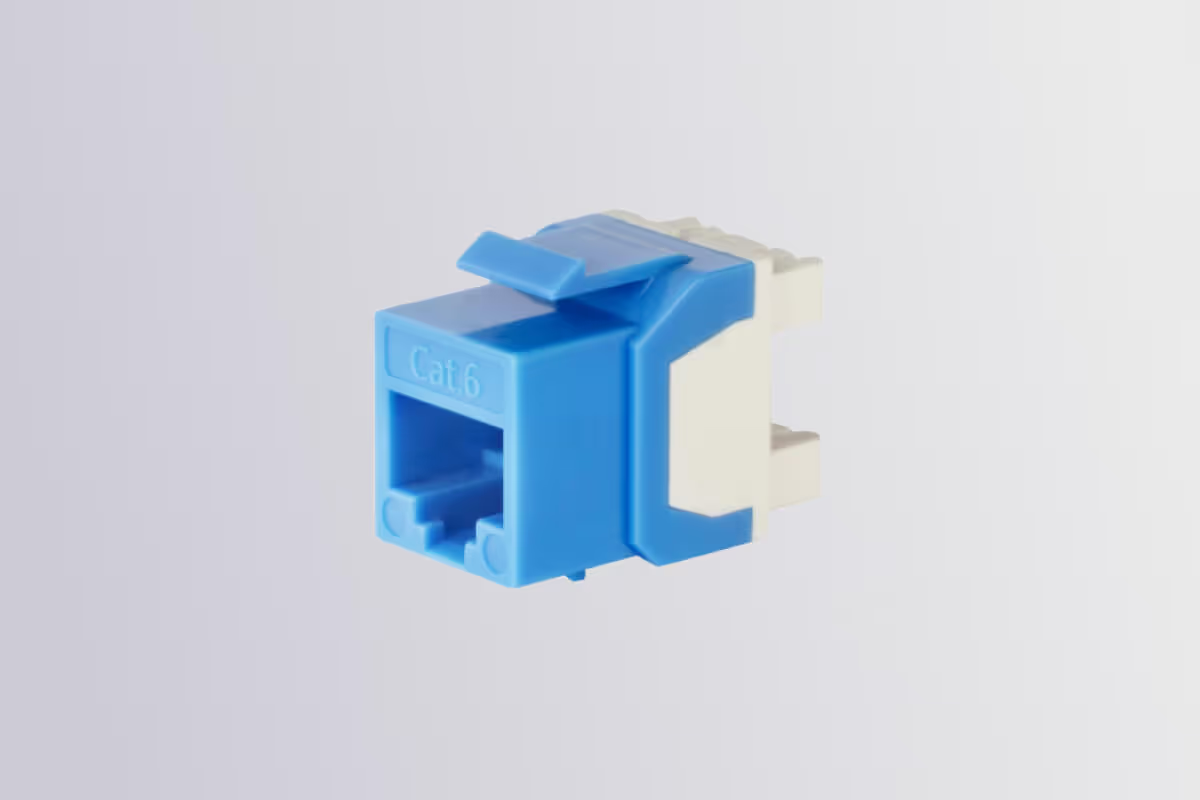
HFCL IO Jacks provide reliable modular termination for structured copper cabling used in enterprise and telecom networks. Precision contact alignment ensures consistent electrical performance and low signal degradation across network links. Designed for high mating durability, they support repeated insertion cycles without compromising performance. The compact modular format allows seamless integration into keystone panels and wall outlets, forming a critical interface between horizontal cabling and connected network devices.
Features
Benefits
Easy Punch Down Type
Easy punch down jack simplifies cable termination and enhances user-friendliness for quick and efficient network connections
Keystone Universal Design
Keystone design ensures easy mounting onto the wall plates, allowing various types to combine into a single customized panel that has multiple ports
Both Component and Channel Compliant
Adhering to the channel and component compliances ensures integrity, reliability and high-performance networking solutions
ANSI/TIA-568.2-D and ISO/IEC 11801 specified
Meeting the global standards ensures longevity in the network, avoiding errors thus future-proofing the network systems for usage in the longer run
Key Specifications
Applications
- Premise Cabling
- LAN Ethernet Systems
- Data Communication Networks
- Surveillance Camera Networks
- Wireless Access Points
Variants
- CAT6 Unshielded RJ-45 Keystone IO Jack
- CAT6 Shielded Die-Cast RJ-45 Keystone IO Jack
- CAT6A Unshielded RJ-45 Keystone IO Jack
- CAT6A Shielded Die-Cast RJ-45 Keystone IO Jack
FAQs
Information Outlet (IO) Jacks are female connectors used in data communications, particularly for local area networks (LANs). They are usually mounted in a wall plate or patch panel.
IO Jacks can be used for premise cabling, LAN ethernet systems, data communication networks, surveillance camera networks and wireless access points.
Yes, our IO Jacks are ANSI/TIA 568.2-D and ISO/IEC 11801 standardized.
Consider factors such as the connector type, category rating, compatibility with your network equipment, and adherence to industry standards like ANSI/TIA or ISO/IEC while choosing your keystone jack.