HFCL A2 180/190 Optical Fiber
A2 180/190 Fiber for Bend Resilient Excellence

About
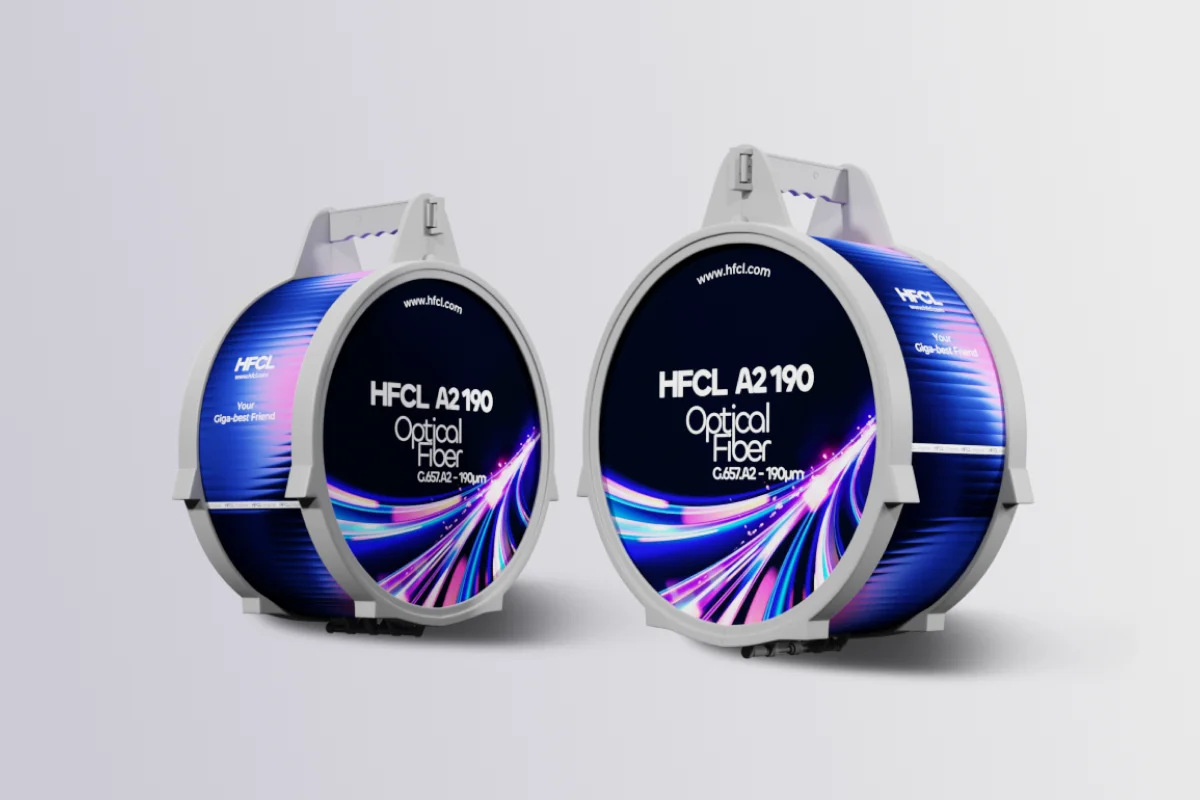
Elevate your connectivity with HFCL A2 180/190 optical fiber, a single-mode optical fiber designed for excellence. Its smaller diameter, coupled with remarkable bend resilience, makes it ideal for high-density applications, ensuring lower losses and enhanced data transmission. Complying with ITU – T G.657.A2 standards, this optical fiber performs well in long-haul transmissions, metro networks, access networks, FTTH networks, and high-density applications like data centers and fiber optic sensing systems.
Features
Benefits
Smaller Diameter
Enables high fiber count in limited space, perfect for densely packed applications, offering optimal data transmission capabilities in different network settings
Reliability in Sharp Bends
Resilience to sharp bends ensures minimal losses, maintaining consistent connectivity, this fiber optic technology plays a crucial role in network upgrades
Future-proof Standards Compliance
Meets stringent ITU – T G.657.A2 standards, ensuring longevity and compatibility with evolving network requirements
Versatility Across Networks
Suited for various applications, from long-haul transmissions to high-density data centers, providing a versatile solution
Key Specifications
Applications
- Long-haul transmission
- Metro networks
- Access networks
- FTTH networks
- High density applications such as data centers
- Fiber optic sensing systems
Variants
FAQs
Modes in fiber optic technology pertain to the various paths that light signals can take while traveling through the fiber core. These paths, or modes, differ in the way they reflect within the core, influencing the characteristics of signal transmission. The number of modes in a fiber defines its mode structure, influencing factors like bandwidth and dispersion.
Optical fibers find extensive applications in medicine, serving as crucial components in endoscopy procedures and various medical imaging technologies. Their flexibility and ability to transmit light efficiently enable minimally invasive surgeries, diagnostic imaging, and precise visualization of internal organs, contributing to advancements in medical procedures and patient care.
Optical fibers differ from copper in their mode of signal transmission. Unlike copper, which uses electrical signals, optical fibers utilize light signals for communication. This distinction brings advantages like higher bandwidth, longer transmission distances, immunity to electromagnetic interference, and enhanced data security, making optical fibers a preferred choice for modern communication networks.