How HFCL MPO Trunk Cables Enabled 70% Space Reduction and 80% Faster Deployment for Global AI and Cloud Infrastructure?
Overview
The exponential rise of artificial intelligence, machine learning, and cloud computing has fundamentally transformed the architecture of modern data centers. Hyperscale operators and AI infrastructure providers are deploying compute at a scale never seen before driving an urgent need for fiber cabling solutions that are denser, faster to deploy, and globally compliant.
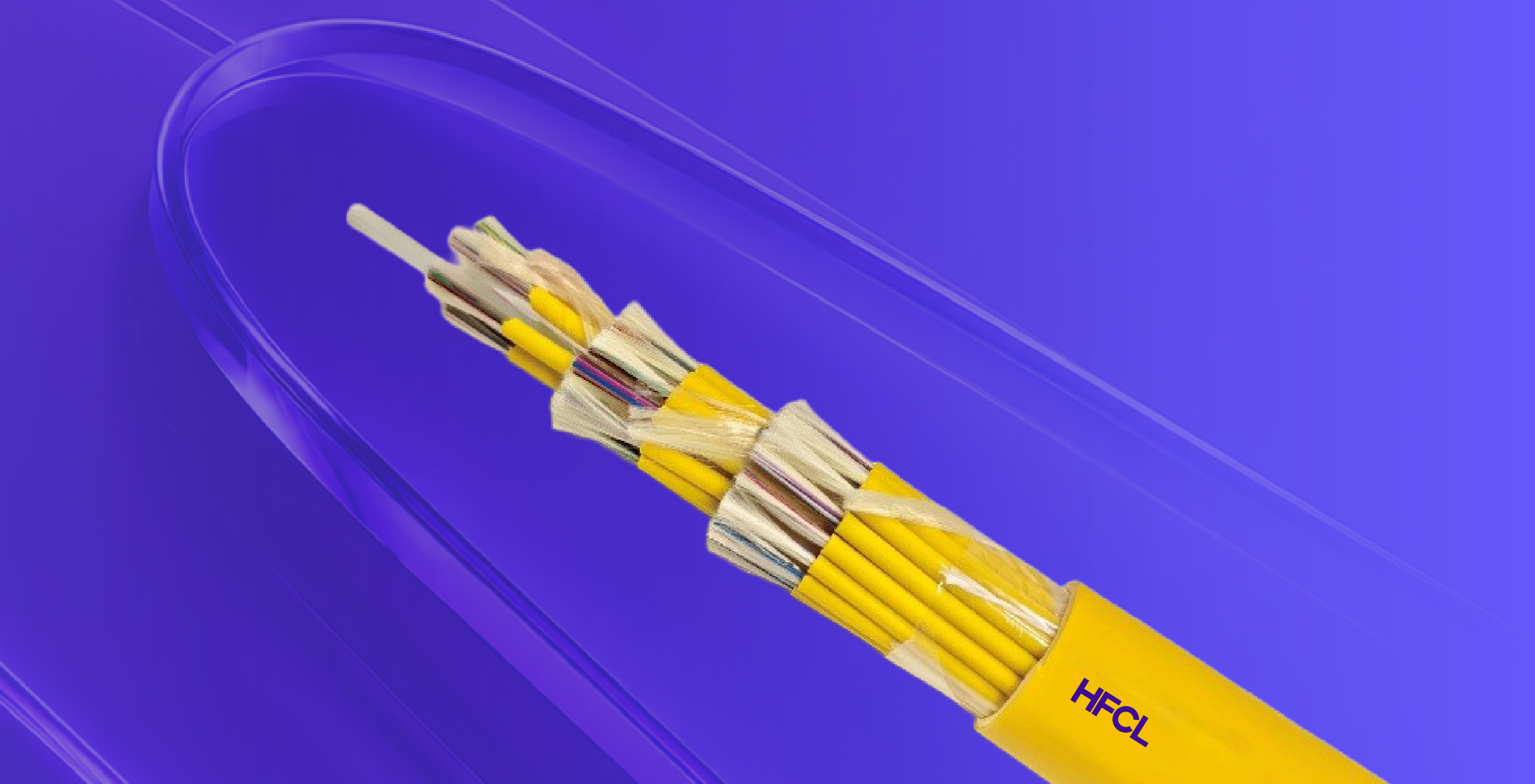
HFCL recognized this inflection point and developed a purpose-built MPO Trunk Cable solution using advanced riser/CPR-rated micro-distribution cable technology. The product family is built around three precision-engineered subunit designs a 12-fiber 2.0 mm subunit, 16-fiber 2.3 mm subunit and 24F 3.0mm subunit utilizing 250 μm low-loss optical fibers. Together, they deliver the fiber density, mechanical resilience, and environmental performance required by the world's most demanding high-performance data center environments.
Case Study Highlights
- Multi-region fire compliance: UL 1651 (OFNR), UL 1666 (Riser), UL 1685, FT-4 (Canada), and CPR class B2ca (EU)
- High-density fiber connectivity supporting 8–24 fibers per MPO interface
- Rapid deployment via pre-terminated plug-and-play MPO trunk and patch cables
- Compliant with global standards GR-409 and ANSI/ICEA S-83-596
- AI and hyperscale ready engineered for 400G/800G data transmission at scale
Customer Overview
HFCL’s MPO Trunk Cables are deployed by leading global technology and digital infrastructure organizations operating large-scale AI, cloud, and data center environments. These customers require fiber connectivity solutions that deliver high density, rapid deployment, global fire safety compliance, and reliable performance in mission-critical networks. Additionally, HFCL supplies MPO cables to a global leader in interconnect solutions, supporting advanced connectivity assemblies for AI infrastructure, high-performance computing, and enterprise data center deployments worldwide.
Challenges Faced
Delivering MPO Trunk Cables fit for AI and hyperscale data center infrastructure required solving four critical engineering challenges:
Sub-Unit Material Selection:
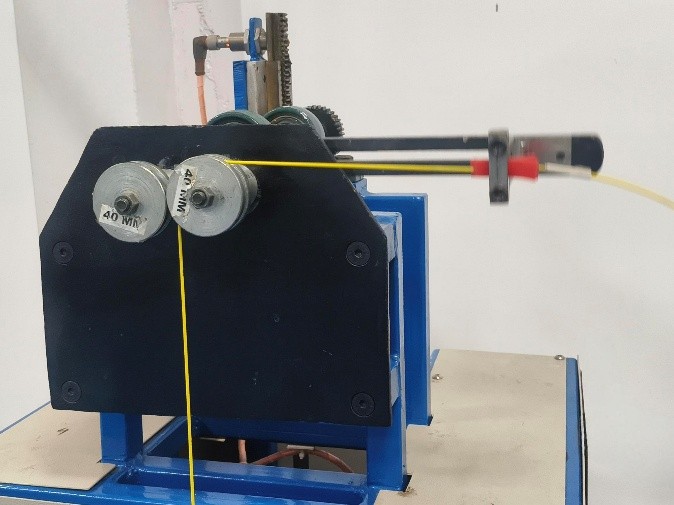
The sub-unit jacket had to survive 300 repeated bend cycles without mechanical failure. Achieving the precise balance between flexibility (to pass kink testing) and stiffness (to protect fibers under repeated bending) proved elusive too rigid and the cable kinked; too soft and fiber protection was compromised.
Shrinkage Control:
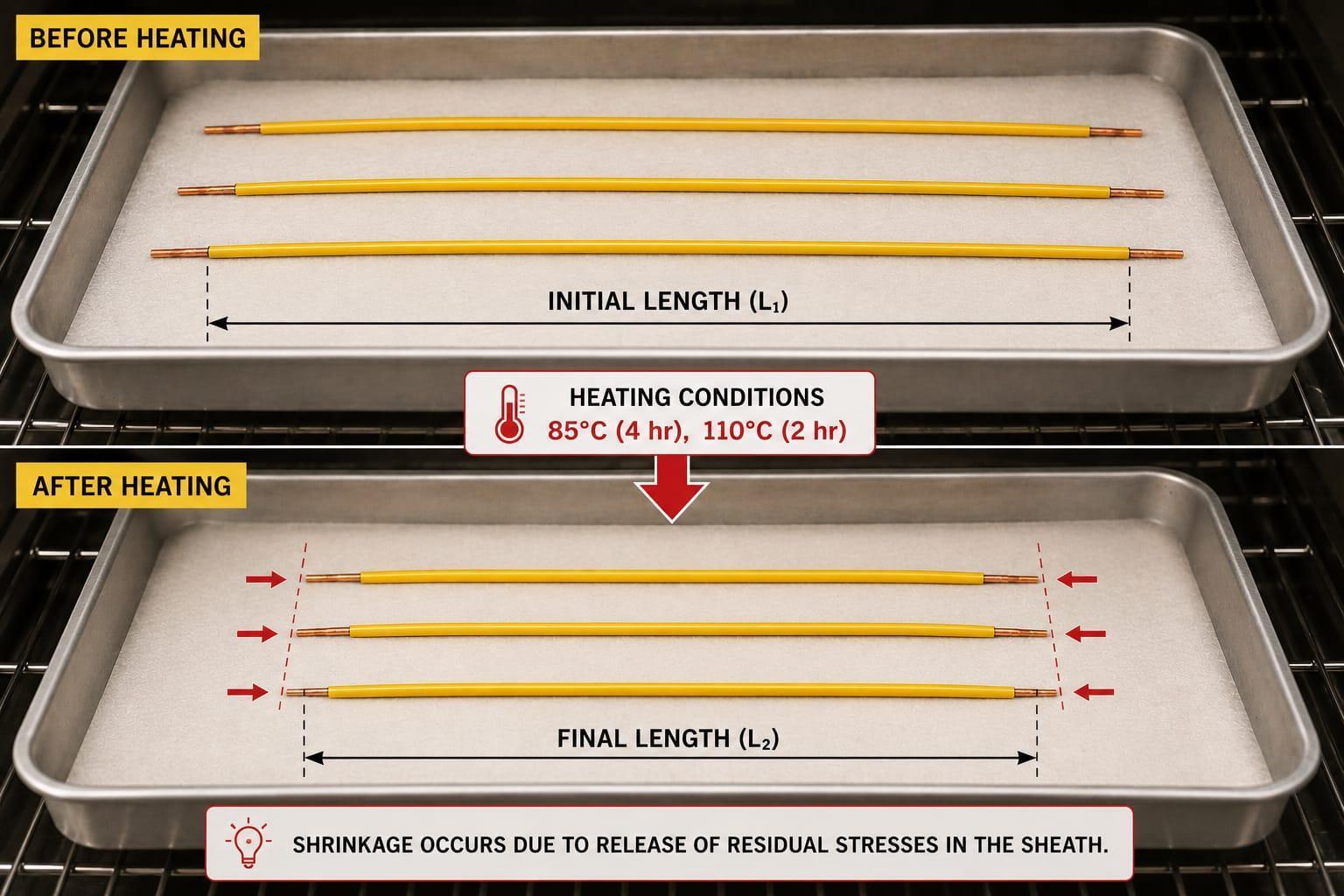
Sub-unit shrinkage exceeding 5% leads to dimensional instability and failure under environmental testing. Consistently achieving shrinkage below this threshold without sacrificing manufacturing throughput demanded precise control of extrusion parameters.
Outer Jacket Development:
Meeting the stringent European CPR Class B2ca,UL fire classification required identifying a jacket material that simultaneously delivered fire retardancy, mechanical integrity, and processability on high-speed production lines. No off-the-shelf formulation met all three criteria.
Temperature Cycling Performance:
The cable was required to maintain optical and mechanical stability across a -20°C to +70°C range through repeated thermal cycles simulating the harsh conditions inside active data center environments. Achieving this demanded both careful material selection and precise structural engineering.
HFCL Approach to These Challenges
HFCL’s engineering team applied a systematic, data-driven development methodology combining material science, process engineering, and iterative qualification testing to resolve each challenge:
1. Selection of Sub-Unit Material
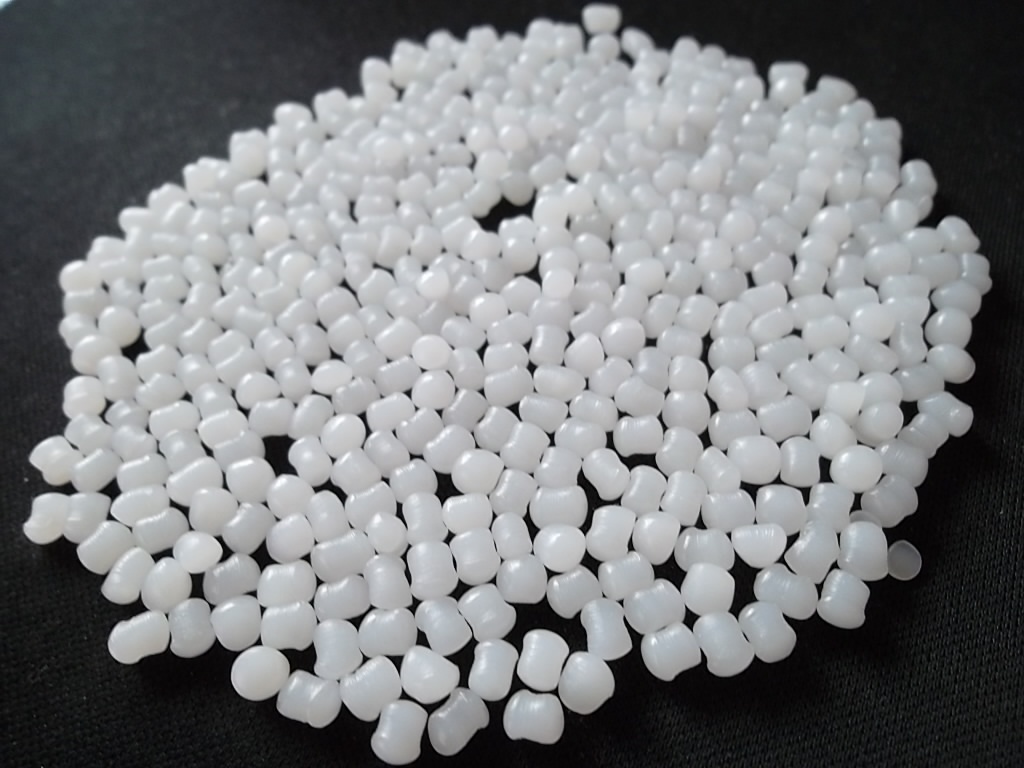
Multiple candidate materials were evaluated and tested to identify the optimum balance between flexibility and stiffness. Through iterative trials and qualification testing, a material was selected that successfully met the repeated bending and kink resistance requirements.
2. Shrinkage Optimization
To achieve shrinkage below 5%, extrusion tooling parameters such as Draw-Down Ratio (DDR) and Draw Ratio Balance (DRB) were optimized. These improvements enabled compliance with shrinkage requirements without compromising production speed or manufacturing efficiency.
3. Outer Jacket Material Development
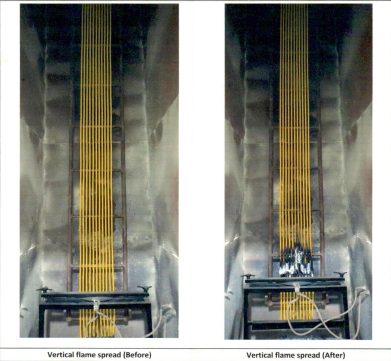
Several fire-retardant material formulations and LOI combinations were evaluated through extensive trials. Cable samples with varying jacket thicknesses were manufactured and tested, leading to the selection of a jacket construction that successfully met the B2ca and UL fire performance requirements.
4. Temperature Cycling Optimization
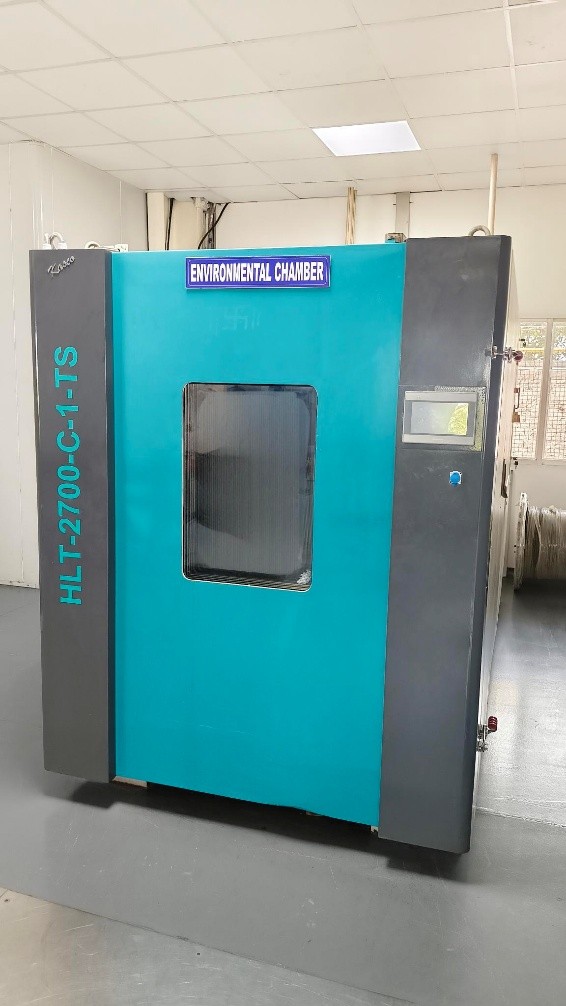
Cable design and process parameters were systematically optimized to improve temperature cycling performance. Key parameters included lay length, sub-unit configuration, payoff tension, and drum dimensions. These optimizations ensured stable cable performance across the specified temperature range and during environmental qualification testing.
Success Metrics
Conclusion
HFCL’s MPO Trunk Cable demonstrates the company’s ability to address the evolving connectivity demands of modern AI and cloud infrastructure through innovation in fiber design, fire safety compliance, and deployment efficiency. Designed to support 400G/800G networks while meeting stringent global compliance standards, the solution enables faster, denser, and more scalable data center deployments. As AI workloads and cloud environments continue to expand, HFCL remains well positioned to support the next generation of high-performance digital infrastructure with reliable, future-ready fiber connectivity solutions.
Planning a 400G/800G build? Talk to our data center connectivity team about MPO trunk cable requirements.