High Fiber Count, 80% Fill Ratio, Zero New Trenches: Doubling US Long-Haul Capacity in 1” Microducts
Case Study Highlights
- 2X Fiber Capacity Zero New Trenching
- Proven 1.4km Jettingat 80% Duct Fill
- 12.5% Faster Friction-Reduced Installation
- Market-Leading 9.9 Fibers/mm² Density
- 46% Lower Carbon Footprint
Overview
A major U.S. service provider faced a massive bottleneck when their underground microducts reached full capacity just four years after installation. To avoid a multi-million-dollar construction project and the regulatory headaches of digging new trenches, they needed to double their fiber count within their existing 1-inch pipes. They solved this by using HFCL’s Intelligently Bonded Ribbon (IBR) technology, which uses high-density, flexible fiber ribbons that fold to fit into tight spaces. This allowed the provider to bypass new construction entirely, significantly increasing network capacity and speed of deployment by utilizing their existing infrastructure more efficiently.
Challenges Faced
The project centered on a fundamental engineering conflict: the physics of microduct installation traditionally dictates that as fiber count increases, reliability and distance decrease. To meet the provider's mandate, HFCL had to navigate several critical challenges that pushed the boundaries of conventional cable design.
HFCL’s Approach to These Challenges
To resolve the complex trade-offs between density, weight, and mechanical resilience, HFCL implemented a multi-dimensional design strategy. This approach moved beyond incremental improvements, utilizing material science and structural innovation to redefine theperformance limits of high-count fiber.
Reduced Fiber Diameter
The foundation of the solution was the transition from 250-micron to 200-micron fiber technology. This shift enabled a significant reduction in the overall cable diameter while enhancing macro-bend performance. By optimizing the internal geometry, HFCL successfully accommodated higher fiber counts within restricted microduct spaces without compromising signal integrity, attenuation, or transmission quality
Tubeless Design
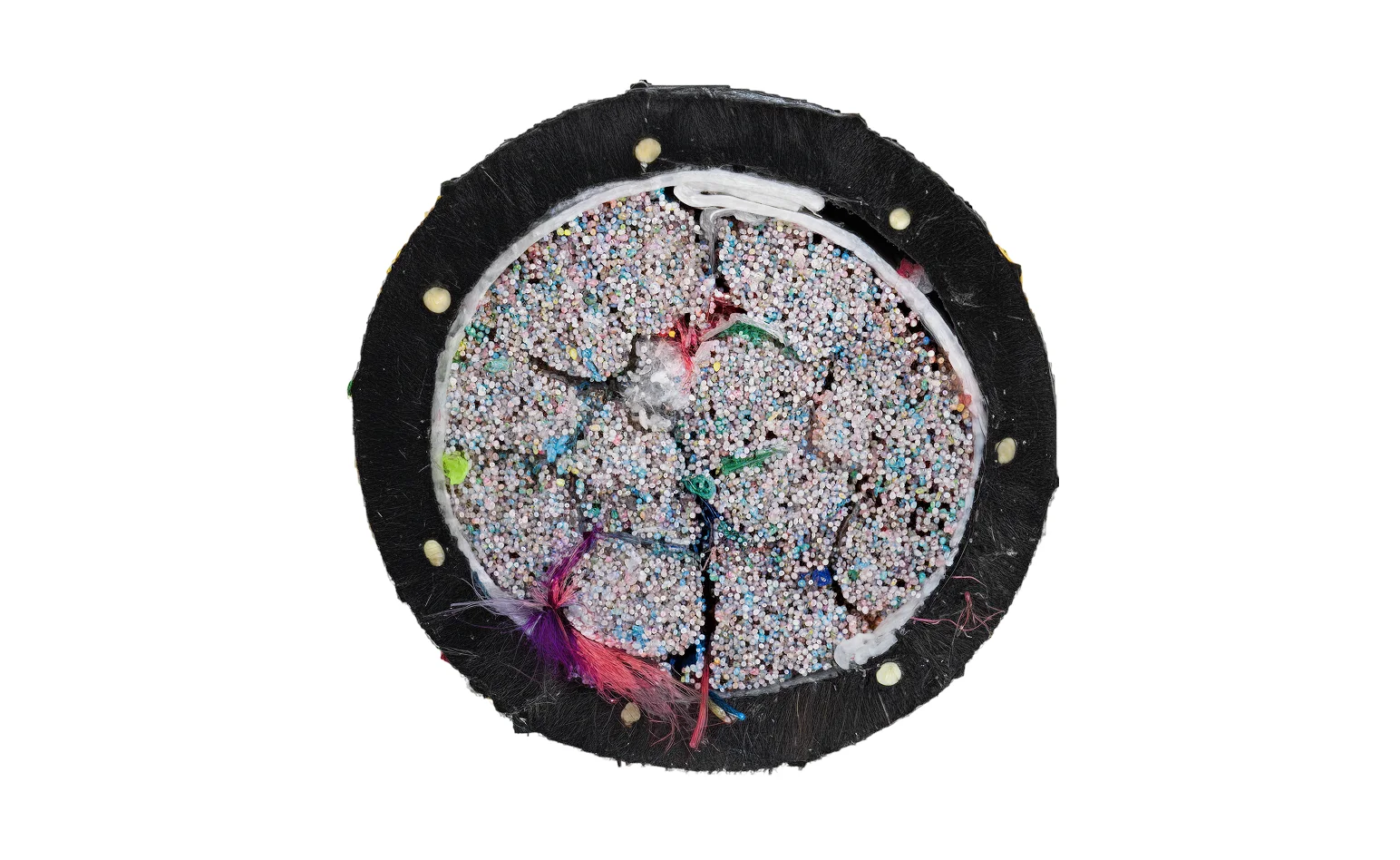
To address the weight challenge, HFCL utilized a tubeless architecture. By eliminating traditional buffer tubes and using specialized binder yarns to secure the fiber ribbons, the team significantly reduced both the mass and the stiffness of the cable. This streamlined structure improved blowing performance and simplified field handling, allowing for faster cable preparation and ribbon access.
Improved Mechanical Durability
Recognizing that extreme miniaturization can lead to structural vulnerability, HFCL optimized the cable's internal reinforcement. Following initial observations of deformation under high radial pressure, the construction was re-engineered to withstand compressive forces of up to 100N/cm. This ensures the cable maintains structural integrity during high-speed installation without any significant change in fiber attenuation.
Experimental Design Validation
To ensure long-term reliability, HFCL employed a comparative testing framework. Two distinct cable variants, featuring different strength-member configurations, were subjected to rigorous mechanical testing and handling simulations. By analyzing the interplay between tensile performance and structural stability, the team finalized a design that provides the highest durability with the lowest possible weight profile.
Friction-Reducing Sheath
To bypass the aerodynamic limitations of high-fill-ratio installations, HFCL adopted a Luffa-shaped outer sheath. This textured geometry minimizes surface contact with the microduct wall while maximizing air drag efficiency. This breakthrough allowed the cable to glide through nearly full ducts, delivering a 12.5% reduction in installation time over conventional cable designs.
Ribbon Technology Integration
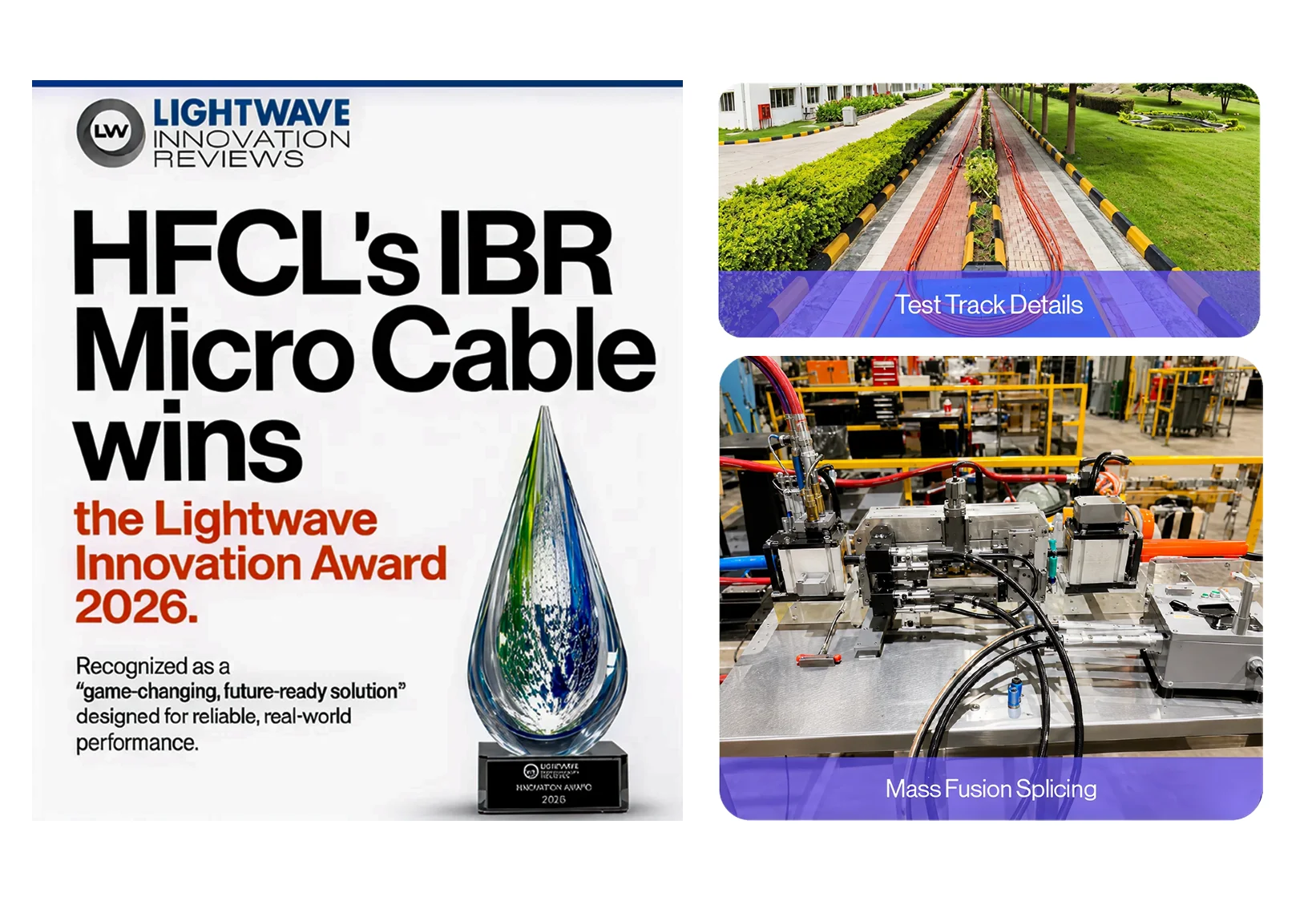
The final pillar of the approach was the integration of Intermittent Bonded Ribbon (IBR) technology. This design allows fibers to remain flexible during installation but act like traditional ribbons for splicing. This enables technicians to perform mass fusion splicing instantaneously, significantly reducing the labor cost and time required to activate high-capacity network segments
Success Metrics
The field trials and technical evaluations confirmed that HFCL’s IBR series doesn’t just meet industry standards; it redefines them for high-density applications. The following metrics highlight the real-world impact of deployment:
Key Applications
HFCL’s IBR Micro Cable series is engineered for environments where infrastructure density and rapid scalability are non-negotiable. Its unique combination of high fiber count and small footprint makes it the ideal solution for several critical sectors:
Long-Haul Networks
The series provides the essential foundation for high-capacity backbones across vast geographical distances. By doubling fiber capacity within existing rights-of-way, operators can scale their inter-city and inter-state networks without the massive capital expenditure of new trenching.
Data Center Interconnects (DCI)
As AI and cloud computing drive unprecedented data traffic, the IBR series enables high-speed, high-density links between hyperscale server hubs. Its compact design allows for maximum bandwidth in congested conduits typical of data center environments.
Metro and Regional Rings
In dense urban areas where duct space is at a premium, this technology enables seamless network densification. It allows service providers to expand their "fiber-to-the-curb" and regional ring capacity by leveraging legacy infrastructure that was previously considered at capacity.
5G Backhaul
To support the low-latency and high-bandwidth requirements of 5G, the IBR series provides the robust fiber deep-links needed to connect a massive number of small cells and mobile towers. This ensures the backhaul infrastructure can keep pace with the exponential growth of mobile data.
Enterprise and Campus Networks
The series offers a future-proof solution for large corporate sites, universities, and industrial campuses. Its scalable architecture allows for the rapid deployment of high-fiber-count private networks that can evolve alongside the organization’s digital needs.
Conclusion
HFCL’s high-density IBR series represents a paradigm shift in how operators approach capacity constraints in long-haul and metro environments. By successfully balancing the competing demands of extreme fiber density, mechanical resilience, and installation velocity, HFCL has delivered a solution that effectively reclaims the backbone of existing infrastructure. The successful deployment of the 864, 1728, and 3456 fiber designs proves that the physical limits of legacy microducts can be bypassed through strategic engineering.
Ultimately, this innovation allows global service providers to double their network capacity without the prohibitive costs of new civil work, providing a future-proof foundation that aligns perfectly with both the technical demands of 5G and AI-driven traffic and the operational goals of long-term sustainability.