Flat Drop Cable Solves Capacity and Installation Delays for US Consumer Electronics

Case Study Highlights
- Tubes with 5.96 fibers/mm²density - for compact FTTx builds
- Gel-free dry tube design, saving time and consumables
- 1.35 kN tensilestrength, ICEA S-110-717standards
- Lightweight, easy handling with compatibility for conventional wedge clamps and tools
- Flat drop profile supporting up to 36 fibers
Overview
The 36F MLT Flat Drop Cable houses 36 fibers within the same footprint as a standard 24-fiber cable. By incorporating 12-fiber inside a dry subunit, the design achieves a remarkable fiber density of 5.96 fibers/mm², ensuring 33% higher capacity without expanding the cable size.
The gel-free dry construction simplifies splicing and termination, cutting installation time while maintaining superior mechanical strength (1.35 kN tensile rating) and long-term reliability. Its flat profile allows easy clamping, routing, and compatibility with conventional field tools.
Customer’s Overview
A leading U.S.-based consumer electronics and connectivity solutions company aimed to enhance its fiber optic network to support next-generation data and device communication needs. The goal was to increase fiber capacity, simplify installation, and ensure long-term durability all within the same compact infrastructure.
Partnering closely with the customer’s engineering team, HFCL designed and delivered the 36F MLT Flat Drop Cable, a sustainable, gel-free, and high-performance solution that delivers more fibers, faster installations, and reduced operational complexity for modern FTTx environments.
Challenges Faced
HFCL’s Approach to These Challenges
- Compact Dry Tube Development: Achieving a 12-fiber dry tube within a compact outer diameter demanded precise control over extrusion and EFL parameters.
- Component Optimization: Tooling was redesigned and modified for precise tube and yarn positioning inside the cable core, ensuring accurate alignment and consistent manufacturing quality.
- Fiber Movement Control: Compact dry tube dimensions, combined with controlled EFL, significantly limited fiber movement, confirmed through 56hr vibration and 30hr galloping tests using temporary fiber-access setups
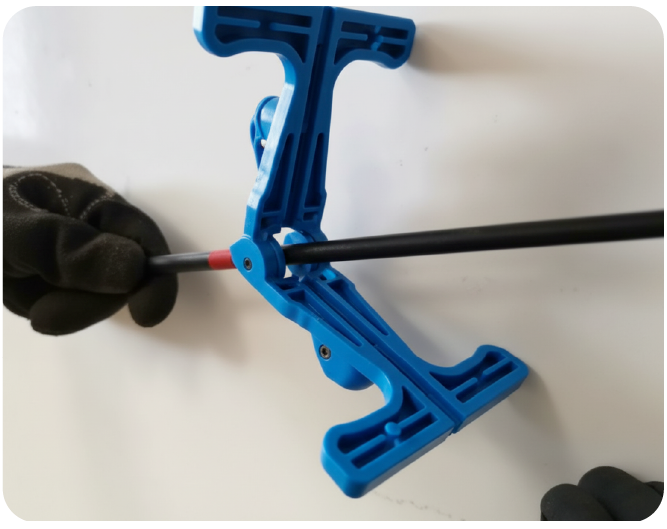
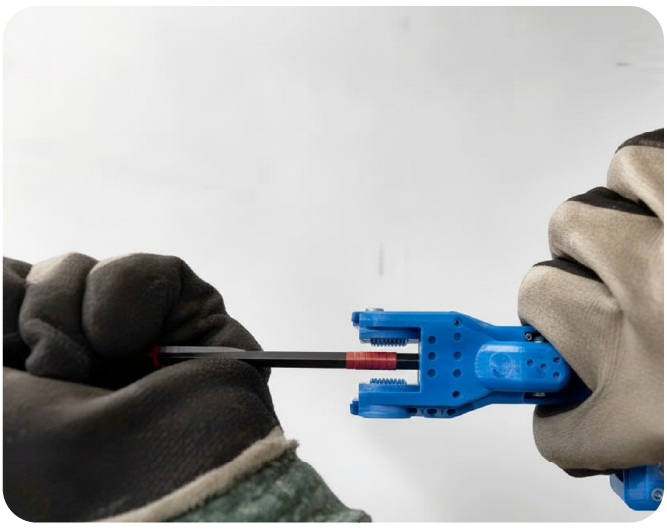
- Tool compatibility: Cable dimensions were engineered to be fully compatible with Jonard FOD-2000, allowing seamless operation with cable slitters and easy access to fibers
- Mechanical Strength: Incorporation of two strength members reinforced the cable structure, achieving the required 1.35 kN tensile strength while maintaining a compact and efficient design.

Success Metrics
- Compliance & Reliability: Fully meets Telcordia GR-20 and ICEA S-110-717 standards; performs reliably between –40°C to +70°C and passed IEEE 1222 galloping and Aeolian vibration tests for aerial stability.
- Operational Efficiency: The dry construction eliminated gel cleaning, saving about 4 minutes per 3 tubes during splicing and significantly improving rollout speed.
- Sustainability & Design Efficiency: Reduced material weight by 4%, cutting 1.9 kg CO₂e/km of cable and simplifying logistics while supporting eco-friendly deployments.
- Scalability & Strength: Achieved 33% capacity gain without footprint expansion; dual strength members maintained a 1.35 kN tensile rating and up to 15D bend resistance for long-term durability.
Applications
- Fiber-to-the-Home (FTTH) deployments
- Aerial drop connections for consumer broadband networks
- Last-mile fiber expansions in dense urban and suburban regions
- Rural connectivity and smart infrastructure rollouts
- Edge network and IoT backbone deployments
Conclusion
HFCL’s 36F MLT Flat Drop Cable redefines efficiency and scalability in compact FTTx environments. By combining dry-tube innovation, enhanced tensile performance, and sustainable design, it empowers global connectivity providers to deploy faster, cleaner, and more resilient networks.
Through close collaboration and design customization, HFCL continues to support its partners in building future-ready digital infrastructures that meet the evolving demands of next-generation communication ecosystems.