Smart Hotels, Smarter Networks: Powering the IoT Revolution in Hospitality
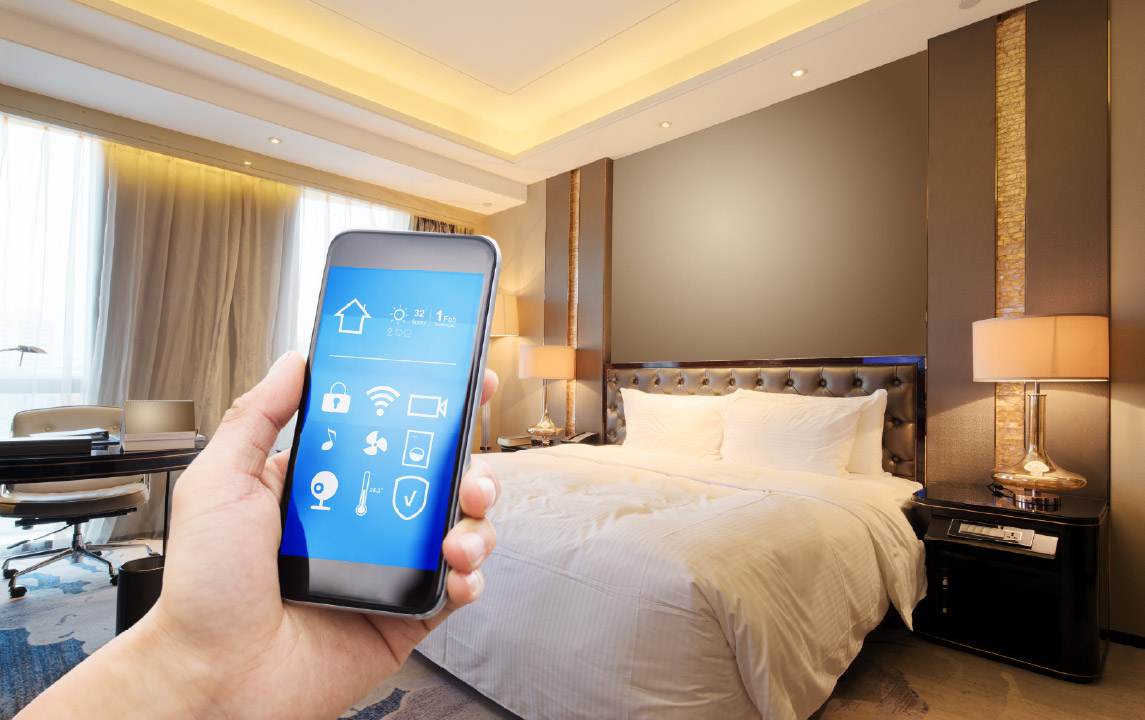
The hospitality industry has officially moved past the era where "free Wi-Fi" was a luxury perk listed on a hotel’s brochure. Today, connectivity sits at the center of the entire guest experience. As we lean into the "Smart Hotel" era, defined by hyper-personalization, mobile check-ins, smart room controls, and AI-driven concierge services, the pressure on the underlying network infrastructure is tremendous.
To enable the next phase of digital transformation, hoteliers must shift their focus from providing high-speed guest Wi-Fi to deploying comprehensive hospitality networking solutions that can support large-scale Internet of Things (IoT) environments reliably and securely.
What are Hospitality Networking Solutions?
Hospitality networking solutions are the wired and wireless infrastructure that connect guest Wi‑Fi, smart room devices, security systems, and operations across a hotel.
Why is Hospitality Networking Evolving for the Software-Defined Guest Experience?
Consider the experience of a guest arriving at a modern luxury hotel or resort. Even before reaching their room, their smartphone has connected to the hotel’s guest Wi-Fi through a seamless, secure onboarding process. As they enter the room, the lighting adjusts automatically, the air conditioning activates based on their preferences, and the entertainment systems sync instantly.
These experiences are not accidental. They are enabled by advanced hospitality networking environments where intelligent systems continuously communicate through high-performance Wi-Fi systems for hotels. Behind the scenes, hundreds of simultaneous IoT interactions take place in real time, without noticeable latency or disruption. In today’s hospitality landscape, a smart room that responds slowly is no longer viewed as innovative; it directly impacts the guest experience.
Guest expectations have fundamentally changed. Modern hotel Wi-Fi solutions must now support an expanding ecosystem of connected technologies, including smart locks, occupancy sensors, IPTV platforms, voice assistants, connected lighting, and energy management systems operating across the property.
As a result, hospitality networking infrastructure is being redesigned to support high-density, always-connected environments where performance, security, and reliability are critical. To support this level of connectivity, access points, the switching infrastructure, and the centralized management platform that power these systems must work in perfect coordination.
Why High-Density Wi-Fi Matters in Hotels?
Hotel guests rarely travel with just one connected device today. Most carry smartphones, laptops, tablets, smartwatches, and streaming devices, expecting fast and reliable connectivity throughout their stay. When this demand is multiplied across a 100+room property, alongside a number of smart sensors, digital locks, thermostats, surveillance cameras, and other connected systems operating simultaneously, the hotel network is required to support thousands of concurrent connections at any moment of the day.
WiFi 6 access points engineered for high-density hotel environments handle the multi-device reality of modern guests while simultaneously serving in-room IoT endpoints.
At the same time, purpose-built wall plate access points are becoming essential in hospitality networking deployments. By delivering connectivity directly inside guest rooms, they help eliminate the signal loss and performance issues commonly caused by concrete walls, long corridors, and complex building layouts. The result is that every automated in-room experience, from smart lighting to mobile room keys to connected entertainment, has the consistent, close-range wireless foundation it needs to perform without interruption.
What Role Do PoE+ Network Switches Play in Powering a Hotel's IoT Infrastructure
While access points carry the visible face of a hotel's connectivity, the real work operates in the background. Legacy hotel networking infrastructure often fails not because of poor wireless coverage, but because the switching and backhaul layers beneath it cannot support the data volumes that IoT devices generate.
Modern hospitality properties require PoE+ network switches (Power over Ethernet Plus, based on IEEE 802.3at) that do far more than move data between devices. These switches deliver both power and connectivity through a single cable to operational IoT endpoints across the property:
· Smart Lighting & HVAC: Reducing energy costs through automated occupancy sensors.
· IPTV & Streaming: Ensuring that a guest’s 4K Netflix stream doesn't stutter when the person in the next room triggers a voice command.
· Security Infrastructure: Powering high-definition AI surveillance cameras that ensure guest safety across the perimeter.
By eliminating the need for separate power infrastructure for each device class, hospitality properties can reduce deployment complexity, lower total cost of ownership, and improve operational reliability.
Why Are Hotels Moving to Centralized Network Management?
For hotel groups managing multiple properties, relying solely on traditional on-premises controllers is increasingly difficult to justify. The shift to centrally managed hospitality networks has transformed how IT teams monitor infrastructure, troubleshoot issues, and scale operations.
With intelligent, centralized network management chitectures, hospitality IT teams can oversee the network health of multiple hotel properties from a single dashboard. Zero Touch Provisioning simplifies the deployment of hotel Wi-Fi hardware by enabling devices to automatically configure themselves upon connection, reducing the need for on-site specialist engineers. In high-density areas such as hotel lobbies, cloud-managed controllers can intelligently optimise neighbouring access points through dynamic load balancing, channel optimization, and client steering to maintain a seamless guest experience.
Predictive maintenance extends this intelligence by analysing performance data from various connected devices in real time and flagging potential issues before failures occur. For hotel IT teams, this shifts operations from reactive troubleshooting to proactive management. Real-time visibility into device performance, guest wi-fi usage patterns, peak demand windows, and bandwidth consumption allows networking teams to plan capacity, optimise costs, and maintain a consistent guest experience across properties.
How Hotels Secure Guest Wi-Fi and IoT Devices?
As hotels continue adopting smart technologies, securing the network has become a critical operational priority beyond simply offering hotel Wi-Fi. Smart locks, connected thermostats, and networked minibar sensors can all become entry points if the network is not properly segmented.
To address this, modern hotel networking solutions rely on network segmentation using VLANs (Virtual Local Area Networks). This approach separates different types of network traffic into isolated environments, helping improve both security and operational reliability. Such as:
- Guest Wi-Fi Traffic remains isolated from hotel operations.
- IoT Device Traffic (smart locks, sensors) operates within dedicated and secured network segments.
- Payment systems and POS infrastructure remain in secure, PCI-compliant environment.
This architecture ensures that compromised guest devices cannot reach operational systems and that IoT endpoints cannot expose sensitive data.
What a Future-Ready Hotel Network Look Like in 2026?
The "Smart Hotel" is no longer a futuristic concept; it is the current industry standard. However, a smart hotel built on a weak network is like a Ferrari with a lawnmower engine. To truly power the IoT revolution, providers must move beyond basic connectivity and embrace smarter networks.
By investing in high-density access points, robust network switches, and centralized intelligent network management platforms, hotel brands can build secure, scalable, and high-performance connectivity infrastructures that support both evolving guest expectations and modern hotel operations.
How HFCL Powers Modern Hospitality Networks
Leading hotels choose HFCL’s end-to-end hospitality networking solutions for their reliability, scalability, and deployment flexibility across diverse hotel environments. With integrated Wi-Fi, switching, and intelligent network management platforms supporting cloud, on-premises, and hybrid deployments, hotels can simplify network operations and management across properties. This unified approach helps ensure consistent connectivity, stronger security, and a better guest experience.
See How HFCL Can Build Your Hotel Network
Get a free Hotel Network Assessment and see HFCL's end-to-end hospitality networking solutions. io.hfcl.com/solutions/hospitality-network
FAQ
Hotels use network segmentation, typically through VLANs (Virtual Local Area Networks), to isolate different types of network traffic. Guest Wi-Fi, IoT devices, hotel operations, and payment systems each run on separate network segments with their own security policies. This prevents guest devices from accessing internal systems such as property management software, security infrastructure, or POS networks. The result is stronger security, better performance, and compliance with data protection standards like PCI.
Hotel network infrastructure connects and manages IoT devices such as smart locks, thermostats, sensors, and surveillance systems across the property. High-density Wi-Fi access points and PoE+ network switches provide reliable connectivity and power to these endpoints. Together with cloud-managed platforms, this infrastructure enables automation, real-time monitoring, and seamless smart hotel experiences for both guests and hotel staff.
Modern guests typically connect multiple devices, while hotels also run hundreds of IoT endpoints such as sensors, locks, and smart thermostats. High-density Wi-Fi 6 access points ensure stable connectivity and low latency even when thousands of devices are connected simultaneously across the property.
Network segmentation is essential in hotel Wi-Fi systems because modern properties run multiple types of traffic, guest internet access, IoT devices, payment systems, and operational platforms on the same physical network. Without segmentation, these systems can interfere with each other and create serious security risks. VLAN segmentation solves this by creating isolated virtual network lanes for each traffic type. This prevents compromised guest devices from accessing sensitive systems like the Property Management System or POS terminals. It also ensures heavy guest Wi-Fi usage does not disrupt IoT devices or hotel operations. Additionally, segmentation helps maintain PCI compliance by keeping payment systems on a secure, isolated network.


